Monday, July 9, 2012

Community Supported Agriculture


Alyssa Charney is an MTCC AmeriCorps VISTA serving with the FoodCorps team in Red Lodge.

When I think about Community Supported Agriculture (CSA), I usually think about communities supporting their local farmers through a commitment to purchase regular shares of produce throughout the season, taking on the risks and successes of the farm’s season. CSAs are essential to the infrastructure of local food systems, but recently Red Lodge has taken the concept of CSA to a whole new level.

With only a few weeks to go before the first farmers’ market, in the heat of the summer and growing season, our friend and local farmer, Dick Espenscheid, was faced with the unexpected departure of his garden manager. Four acres of garden were already planted, orders were already placed, and customers were excited for the locally grown, organic produce from Wholesome Foods. But without anyone to manage the garden, and with an overload of work on the ranch, Dick felt he had no choice but to let the garden go for the season.

Upon learning of the news, members of the Food Partnership Council refused to believe it. Driven by much more than our desire to eat good food all season, we wanted to support the land and the farmer who had already given so much to our community. Dick has always been generous to Red Lodge--donating his produce, his wisdom, and even his cattle’s manure to enrich our local food initiatives. And he tells the students I work with that he believes it is important to get healthy, local food into the school cafeteria because “the schools are the future.”

After many emails, phone calls, and a visit to the farm, Dick finally caved to our insistence on “saving the farm.” And so for the past few weeks, carloads of volunteers have left Red Lodge at 6AM to put in more than 120 hours of weeding, moving pipe, and harvesting for market. We work and laugh as we talk about “the great produce rescue of 2012” and how we are “liberating the vegetables” with each row we uncover, and at the end of the day, volunteers get to go home with bags of delicious vegetables they harvested themselves.

What struck me throughout this process, especially as I get ready to begin my second year as a FoodCorps member in Red Lodge, is how the motivation behind what I do on a daily basis has shifted from simply being part of my job description to being driven by my desire to support a food system and a community that I have very much become a part of.  

This past Friday I was excited about the success of our first farmers’ market and about the beautiful community supported produce that Wholesome Foods was able to sell. But about ten minutes into the market, the park’s sprinkler system went off, aimed directly at many of the booths. The response was incredible. Customers, vendors, and volunteers lunged across the grass to cover up the sprinklers with whatever they could find. Shopping bags. Trash cans. Buckets. Bare hands.

The absurd image couldn’t have been more illustrative of the way this community has stepped up when a need presented itself.  Whatever challenges this next year may bring, I’m confident in Red Lodge’s ability to pull weeds for hours, dive to stop sprinklers, and give all that it takes to support our community’s local food system.

Thursday, July 5, 2012

Lessons in Red Lodge

Kate Jones is an MTCC AmeriCorps Summer Associate VISTA serving with the FoodCorps team in Red Lodge.


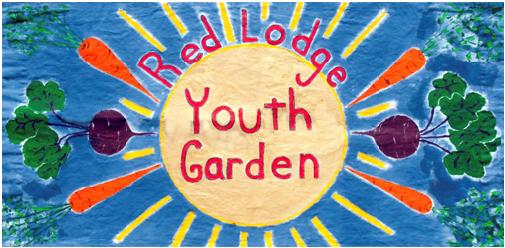
As I watch kids’ eyes grow big and round at the sight of their sprouting beets that they helped plant the week before, I feel my heart swell and know that what I’m doing is helping me to grow as a teacher and advocate, just as it is helping the garden grow.  This summer, I’m serving as an AmeriCorps Summer Associate in my own hometown of Red Lodge.  Every morning, Monday through Thursday, Alyssa Charney, my guiding AmeriCorps VISTA serving with the FoodCorps team, and I lead activities with children ranging in age from about four to ten in the newly-developed Red Lodge Youth Garden.  Every day is devoted to a particular group of children being brought to the garden by either the Children Center or Boys’ and Girls’ Club.  It’s fun to feel the different moods and personalities unique to each group of kids and to keep track of every impact they make on the garden each time they visit.  


What has struck me most through this experience so far is the kids’ enthusiasm.  When we ask them what their favorite veggies are, they almost always have something ready on the tips of their tongues.  However, many have little idea of what some vegetables even look like before they arrive on their dinner plates, but as we show and guide them around the garden on eye-opening tours, you can watch the knowledge work its way into their faces in expressions of curiosity and mild wonder.  It’s a very rewarding feeling, to know that what I’m doing is making a difference in these kids’ lives, whether it’s a small difference or a big one. 

A challenge I’ve come up against so far has been the task of scaling down all the information I want to give to these kids.  In the beginning, I wanted so terribly to teach them everything I have learned on my own these last few years about health, nature, diet, exercise, and the ways they are all connected.  I quickly discovered, however, that the things I wanted to tell them would go in one ear and out the other.  Kids don’t want to be talked at; they learn and absorb best through hands-on activities that require constant interaction.  It has been difficult for me to find ways of fitting the information I want to teach into fun activities, disguising the educational value of the lesson.  But, as the summer wears on, I’m learning what works and what doesn’t, and learning to adapt my lessons to a variety of age groups.    


Overall, I’m loving every day in the garden, and I am very thankful to have this opportunity to learn how to grow my own food, how to instill in children a fascination and excitement for vegetables, and how to work with other people in so many different ways.  I can feel myself growing in heart and experience as quickly as our Swiss chard, already overflowing in its raised bed.  


Monday, July 2, 2012

Many Hats

Anina Estrem is a Communities in Action AmeriCorps VISTA serving with the FoodCorps team in Lame Deer.


It is 3 AM, and I am out behind the Boys & Girls Club watering our vegetable garden. This is not a usual
Photo by John Youngbear
occurrence, but this is the first moment of peace I’ve found all day to check on our plants. For the last week, the Club has been acting as an Emergency Shelter for evacuees of the Ash Creek fire, 20 miles east of Lame Deer. Bathed in hazy blue smoke, the Club has become home base for the Red Cross, the Salvation Army, and a donation and volunteer center. 

I’ve worn many hats during my year of service: “Compost Lady,” nutrition educator, community organizer, gardener, and now donations manager. Because of the fire, I’ve neglected the Club garden in favor of organizing donations of food, clothing, and toiletries during long nights at the shelter. Though it might not fit exactly into my AmeriCorps VISTA FoodCorps job description, I see this experience as yet another opportunity to learn what it’s like to live in this region and see the challenges these communities regularly face. 

Photo by John Youngbear
Coming from Oregon’s Willamette Valley, I grew up knowing how easy and fun local food can be. Here in Rosebud County, I’ve been exposed to the realities of rural living and the difficulty of accessing quality food. It is hard to believe until you’ve lived it and a challenge I couldn’t have dealt with without the support of my wonderful FoodCorps peers. This region has little access to anything fresh or locally grown, and people regularly drive one hundred miles to go grocery shopping. Because of this, there is little knowledge or understanding of the value of local food and has been the major stumbling block to producing in this region.


Although there were times when I was frustrated, I wouldn’t change a single thing about my experience. I have learned that every community moves at its own pace and on its own unique track, and my job has been to harness that energy into something tangible. At the Club in Lame Deer, I’m asked every day if the kids can check on their pumpkins and count the strawberries. At Rosebud School, I discovered the elementary students’ delight in eating raw kale. The Hysham community organized a Bountiful Baskets distribution site, getting one step closer to eliminating the food desert they live in. All of these communities have found their own paths to improving knowledge about healthy food.

My time in Montana is quickly winding down, but I am not stopping here. I will continue to work as a FoodCorps service member in eastern Oregon this August at the North Powder Charter School, where I am excited to face new challenges in a new region. I will be sad to leave eastern Montana, but I am confident that the lessons I’ve learned here will carry me through a continuing career as a local foods activist.

***Donations can be made for fire relief through the Boys & Girls Club PayPal account at bgcncn@gmail.com***