Monday, June 4, 2012

Decisions


Katie Wheeler is an MTCC AmeriCorps VISTA serving with the FoodCorps team in Kalispell.
 
I knew the time would come where I would have to make a choice.  To stay or go. 

Finish my term as an AmeriCorps VISTA and leave Montana to head back to Pittsburgh and begin a graduate program in Food Studies…

OR

…Stay in Kalispell and continue Farm 2 School and food security work.

I have my parents, extended family and friends back east, as well as acceptance into a great graduate school and my beloved city -- all of which carry a hefty weight.

But the list of reasons to stay has always been long.   What I have found here -- the new friends and family, the fulfilling work in a beautiful community, and the professional and personal connections that somehow manage to run so deep after such a short time -- words cannot do justice. 

And now, as the list of reasons to stay continues to grow, it is clear I have made the right choice to join National FoodCorps and go on with my work with Kalispell District 5. 
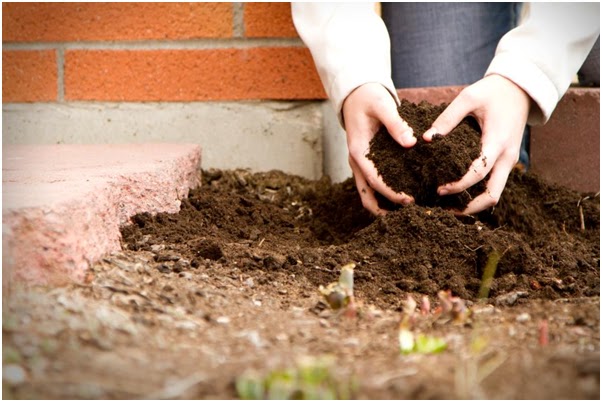
The above photo was taken at KMS and displayed on the 
Communities Take Root website during a 
6-week national voting period.
Some of the newest additions to the “Stay” list include the first-time implementation of a Summer Food Service Program in Kalispell run through District 5, and our triumph in the Communities Take Root national competition sponsored by Dreyer’s Fruit Bars.  

On June 18th,  a 30-40 tree orchard named Grace Orchard: Nourishing Connections at Kalispell Middle School will be installed.  Once it is producing at full capacity, it will provide fresh (and VERY local) fruit to the district food service program and any excess will be donated to the Flathead Food Bank. My mind is already swimming with ideas for ways to integrate the orchard into F2S and nutrition lessons at KMS next year!  

In addition, Jenny Montague, District 5 food service staff, and I have been working diligently this last month to put all of our ducks in a row for the start of our new Summer Food Service Program (SFSP).  The program will provide free lunch and breakfast at three locations throughout the summer, and though an enormous task in a town the size of Kalispell, we could not be happier to make it happen.  In a district where the schools have Free/Reduced lunch rates that range from 36-72%, the need is clear. 

Aside from the obvious benefit (providing free food to local youth!), I am most excited about the timing of the program.  Because what happens in the summer?  Food GROWS!  And a lot of food at that.  As the evident local food enthusiast, this is a BIG (Flathead) cherry on top!

Wish us luck in our first try at hosting SFSP and help spread the word in the Flathead!  We’ll be looking for volunteers all summer long so please contact me if you or anyone you know would like to lend a hand.  You can find me at Katie.t.wheeler@gmail.com or (412) 952-6719.


Wednesday, May 30, 2012

Eating Meat

Lea Howe is an MTCC AmeriCorps VISTA serving with the FoodCorps team in Boulder.


Johnny Grant (of the Grant-Kohrs Ranch) started ranching in the Deer Lodge Valley in the 1850’s. Since then, ranching has come to define the social, political and economic fabric of Montana. Cattle outnumber people by three to one.

Having spent my entire life in a city where people are still coming to the realization that “meat” comes from farms, it was a startling adjustment to live amidst the endless pastures of grazing cows. It was certainly the most beautiful landscape I’d ever seen. But I had a hard time reconciling this idyllic landscape with the factory farms most of these animals end up inhabiting.

And when I talked to the folks in Boulder, very few seemed to even take notice of the ranches. Rather, the ranches got lost in the views. This prompted me to begin a conversation about the business of raising animals. Everyone was eager to talk about hunting, but raising animals didn’t seem to spark the same enthusiastic dialogue.

So I decided to dig a little deeper with some of my students and have a more nuanced discussion about meat. Animals, after all, are essential parts of healthy ecosystems-- and all of us are a part of this ecosystem whether we think about it or not.

To start the conversation, I decided to take students to a small, local goat ranch during kidding season! Kathy, the “goat lady,” introduced each of her goats by name and told students a little bit about each goat’s personality. 

She led the kids over to a majestic white goat. “This is Miracle. Her mother died when she was born. We didn’t think she would make it, but she pulled through and boy, are we glad!”

“This little trouble-maker over here is named Rowdy. She knows just what to do to get a rise out of all the other goats. She can push all their buttons!”

During the trip, students learned how to harvest milk and listened to Kathy as she talked about the art of cheese making. They learned that goats are wonderful fertilizers and effective noxious weed killers. In fact, students voted unanimously to use goats over pesticides for our own weed situation back at the school!

Most importantly, students learned the incredible lengths farmers go to to bring food products such as cheese, milk and meat to their plates. They left with a new found reverence for Kathy and all the other farmers and ranchers in the Boulder Valley. There is no better education than one in which kids can be engaged with all five senses.

The “ranch” came to life that day. It was no longer just a part of the view, but rather a place where things happen. A lot transpires between the barbed wire that often gets lost in the bigger picture.  And it’s that perspective I hope to bring to the students. Taking a deeper look is the most important lesson I hope to impart. It’s not just the same old fields on the ride to school every day, but rich places where people make a living, raise food, and honor tradition.