
As our year of service comes to a close, I find myself
reflecting on, and almost troubled by, one of our main goals – to build
community capacity and to create sustainable programs. It is easy to keep this
goal on the back burner, constantly thinking about it, but never really acting
on it given our limited amount of time. Looking back, my first two months flew
by simply trying to figure out who’s who within the community and finding my
place in it. Fall was spent organizing and planning for the first National Farm
to School Month and coordinating the Fresh Fruit and Vegetable Snack Program.
Through winter, I really dove into more involved projects – launching the
lentil patty, designing our farm-to-school website, and leading the development
of a local food marketing campaign, just to name a few. So now, here we are
halfway through spring with only a couple months left. I know that I’ve been
working towards the values of farm-to-school programs, but is any of it
sustainable?
 To further the importance of this issue, it is now time to
start planning and preparing for the next service member. It is beneficial to
the community, organization, and volunteer that I provide resources that enable
them to pick up right where I left off. A list of contacts is fine, but I hope
to have projects outlined and key partners lined up for support. With sustainability in mind, partnering with
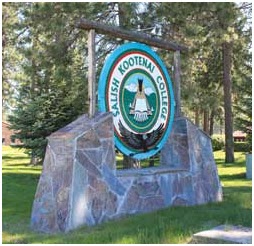
our area’s institutions seems to me an obvious opportunity. Salish Kootenai College (SKC) is located
merely a few minutes away and lends itself perfectly to create programs
surrounding nutrition education and community gardening.
To further the importance of this issue, it is now time to
start planning and preparing for the next service member. It is beneficial to
the community, organization, and volunteer that I provide resources that enable
them to pick up right where I left off. A list of contacts is fine, but I hope
to have projects outlined and key partners lined up for support. With sustainability in mind, partnering with
our area’s institutions seems to me an obvious opportunity. Salish Kootenai College (SKC) is located
merely a few minutes away and lends itself perfectly to create programs
surrounding nutrition education and community gardening.
Last week, I worked with SKC’s Field and Home program to
provide a lentil taste testing activity in their cafeteria. Lentils, again?
You’d think that I’d be tired of talking about those little legumes by now! But
in all seriousness, they are one of the most amazing local foods available.
Montana is the number one state in terms of production, and we ship them all
over the world! Lentils store year round, which eliminates that challenging
issue of seasonality that burdens many farm-to-school programs.

We provided samples of a simple lentil soup with the recipe
and a lentil fun-facts sheet. On the surface, the activity’s purpose was to
inform students about the benefits of eating locally sourced foods, the health
benefits of lentils, and the cost savings of buying in bulk quantities.
However, my purpose for being there was much different. To
me, it was an opportunity to meet the cafeteria staff and to engage with students
and faculty. It paid off with over 30 students showing interest in various
projects.
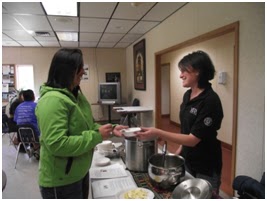 |
| Lindsay serving lentil soup |
Since the lentil tasting event provided information on how
to eat and cook healthy meals on a budget, it was a natural next step to ask
students to sign up for more information regarding these two topics. The
potential projects stemming from this event could turn into a full time job for
next year’s FoodCorps team member! I
will be setting the framework in the next month by meeting with SKC’s education
department and housing department to explore those various opportunities. A couple projects I hope to see continue are
to creating a cooking class series and a student cooperative buying club, which
would involve a lot of coordination, planning, and curriculum development. I also hope that we will create a program in
which SKC’s student teachers utilize the on-campus community garden to gain
hands-on outdoor teaching experience with local elementary students. Fellow MTCC AmeriCorps VISTA with the
FoodCorps team, Leah, in Dillon, started a similar program with UM Western, and
I will be reaching out to her for advice and best practices.
Of course, none of these projects will come to fruition by
the time my service year is complete, and I am quite alright with that! It is
rewarding enough to create these opportunities for next year’s volunteer and to
build relationships that create a sustainable network of farm-to-school
advocates. Of course, it will be up to the next FoodCorps team member to decide
to pursue these projects or not, but I certainly do believe they will share our
vision of partnering with our local institutions.


